AntiqID
Identify an antique from a photo
A photo can return a likely maker or mark, a period clue, and a value range that is not an appraisal.
- Free first scan on iOS
- Mark plus whole object
- Sold prices, not asking prices
Identification requests leave the phone when you scan. Collection items you save stay private on the device.
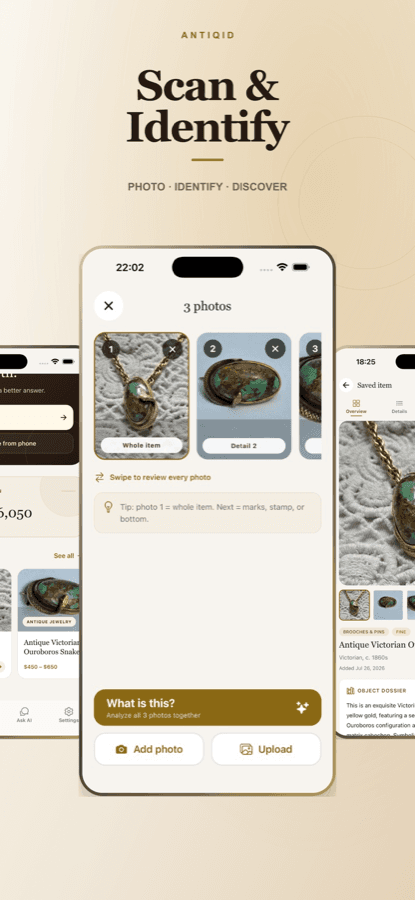
What you get back
One sample of the fields AntiqID returns after a scan. This is a labeled example, not a live result for your object.
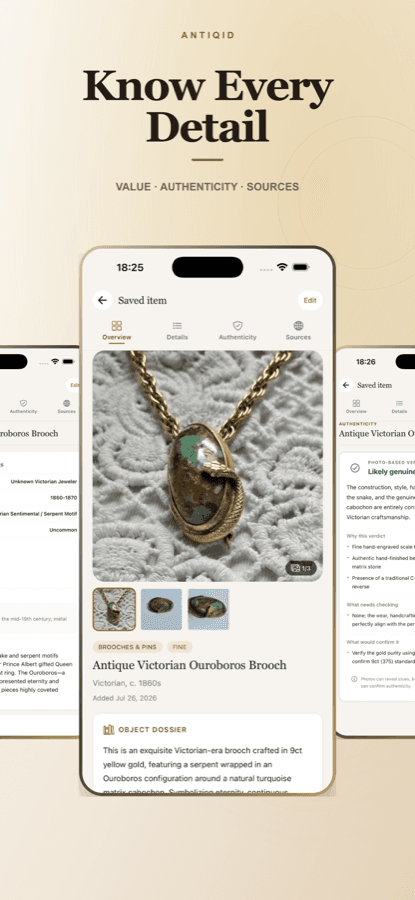
- Mark reading
- Lion passant with a London town mark and a date letter that needs a clearer crop to confirm the year.
- Still uncertain
- Maker initials are partially worn. Period is late Georgian to early Victorian pending a sharper mark photo.
- Fair-market range
- Sold comps for similar sterling spoons in this condition sit below typical asking prices on live listings.
- Confidence note
- Useful as a first read. Not enough alone for insurance, estate division, or a guaranteed sale price.
The three checks
Collectors do three things with an object. Each check has its own page when you need depth.
01
The mark
Lion, Minerva, crossed swords, a tariff stamp — the punches that name the metal, the town, or the factory.
Read hallmarks02
The construction
Joinery, wear, a replaced foot. How it was built often matters more than how it looks from the front.
Photo identification method03
The price
A sold result versus the listing price. Asking prices sell hope; sold prices show the market.
Check antique value
Where the app stops
- Not an insurance appraisal.
- Not a date from a worn punch.
- Not a price from one photo of the front.
- Not a substitute for a specialist when the object has to stand up in court, for tax, or for a five-figure sale.
Where to go next
Read a hallmark
British order, French Minerva, EPNS versus sterling, and what a partial punch can still prove.
Hallmark chartIdentify from a photo
The four-photo method: whole object, base, mark, and joinery or wear.
Photo identifierCheck a value
Sold auction comps versus asking prices, with when the number is not good enough.
Antique valueQuestions
Can a photo identify an antique?+
A clear photo of the whole object plus the mark or construction detail can narrow maker, period, and type. One front-only shot is usually not enough. Reproductions and worn marks still need a specialist.
Photo identification methodWhat is a lion passant?+
The walking lion is the British sterling standard mark on most English silver. It sits with a town mark, a date letter, and a maker's mark. A photo of the full stack is more useful than the lion alone.
Lion passant guideWhy is the asking price different from the value?+
Asking prices are what a seller hopes to get. Fair-market value tracks what comparable pieces actually sold for, after condition. Live listings inflate expectations; sold comps correct them.
Sold versus askingIs the first scan free?+
Yes. AntiqID offers a free first scan on iOS so you can see a mark reading and a range before you subscribe. Estimates are informational, not formal appraisals.
When do I need a person instead of the app?+
Use a human appraiser or dealer when you need insurance, estate, tax, or high-stakes sale documentation — or when the mark is too worn, the piece is unsigned, or authenticity is disputed.
Where the method stopsIdentify an antique from a photo
Mark reading, a period clue, and a sold-based range — free to try on iPhone. Not an appraisal.
Identification requests leave the phone when you scan. Collection items you save stay private on the device.